


Trump Prepares Executive Order for Rescheduling

Reports from Washington have confirmed that President Trump is working on an executive order to direct federal agencies to reschedule cannabis from a Schedule I to a Schedule III substance.
The order, which will be reportedly discussed in a December 12th Oval Office meeting with House Speaker Mike Johnson and Health Secretary Robert F. Kennedy Jr., is meant to circumvent the stalled approval process in the Drug Enforcement Administration (DEA).
Although this is not a complete legalization at a federal level, this bill will prevent people from suffering harsh criminal charges. Moreover, most importantly for this industry, it will nullify section 280E of the US tax code, which currently prevents cannabis companies from deducting operating expenses.
The move marks a strategic shift for the administration, which now positions cannabis reform in light of states’ rights and regulation, rather than social justice.
Sources have noted that the order aims to “cut the red tape” which has left the rescheduling in limbo for well over a year.
A signature on this bill will mark the most dramatic change in federal cannabis laws since the enactment of the Controlled Substances Act in 1970, immediately playing a critical role in making state-legal businesses financially feasible, which have been decimated by effective tax rates of over 70%.
Source: The Washington Post
Congress Passes “Poison Pill” Hemp Ban

The US hemp industry finds itself threatened because of a bill passed in Congress called a continuing resolution, which contains a provision that bans most kinds of hemp cannabinoid products.
A hard limit of 0.4 total THC per package will be imposed on any hemp product, much to the surprise of many people in the industry.
The level is so low that it effectively prevents the sales of full-spectrum CBD oil, delta-8 gummies, and hemp THC beverages, thus closing what is being referred to as “The Farm Bill loophole.”
Legal circles have termed this phenomenon an “extinction event” for thousands of small companies that have based their business model on a vague definition of hemp under the 2018 Farm Bill.
The law, which will come into full force in November 2026, makes non-intoxicating wellness products illegal despite the fact that millions of consumers have come to rely on these products. The industry is preparing for a massive lawsuit over this arbitrary limit.
However, without the repeal or judicial nullification of this legislation, this “grey market” period of hemp farming is poised for a sudden and chaotic end.
Source: Sedgwick / U.S. Hemp Analysis
UK Medical Cannabis Market Breaks Records

Research analysis conducted in December 2025 shows that the medical cannabis industry in the United Kingdom has experienced “explosive” expansion in prescription sales, which have increased by a staggering 262% in the past two years.
The study shows that the UK is quickly emerging as a leading medical market in Europe, with matched flowers of over 9.8 million grams in 2024.
This increase is being fueled by a structural change in prescription writing trends, where patients and physicians have increasingly shifted from mid-potency products to high-THC flower strains, which now represent nearly half of all prescriptions.
The statistics refute an impression of stagnation in, or a lack of competition in, the UK market.
Rather, it highlights a more developed pharmaceutical industry where access to product is improving and product quality is finally becoming stable.
However, this increase is mainly from the private clinic setting, with NHS prescriptions being nearly non-existent.
For global exporters, the UK is an important market for high-quality medical flowers, with demand expected to go from strength to strength through to 2026.
Source: Business of Cannabis
Morocco’s Farmers: “Cannabis is Legal Now, Just Like Mint”

In a remarkable cultural and economic turn of events, Morocco, a country which historically produced the most illicit cannabis in the world, has successfully delivered its first consignment of pharmaceutical-grade cannabis to Australia.
A recent report from the Rif mountains illustrates this human cost in a series of vignettes with local growers such as 70-year-old Mohamed Makhlouf, a man who used to live in fear of police raids but can now legally supply government-licensed cooperatives.
“Cannabis is now a legal product, just like mint,” says a grower, illustrating how this product, which has fueled this region for centuries, is becoming increasingly normalized.
More than 3,300 growers have received licenses since the legalization law in 2021, and the government has approved 67 different cannabis products for export, including CBD oil and hemp textiles.
The government’s plan is to make the poor region of Rif a genuine agro-industrial center, taking power away from drug cartels and giving it to cooperatives.
Although recreational use is illegal, this “white market” revolution is bringing banking, infrastructure, and dignity to a marginalized population in a way that is a bright spot in a otherwise dark region in terms of drug reform.
Source: SFGATE / AP News
Czech Republic Confirms 2026 Legalization Date
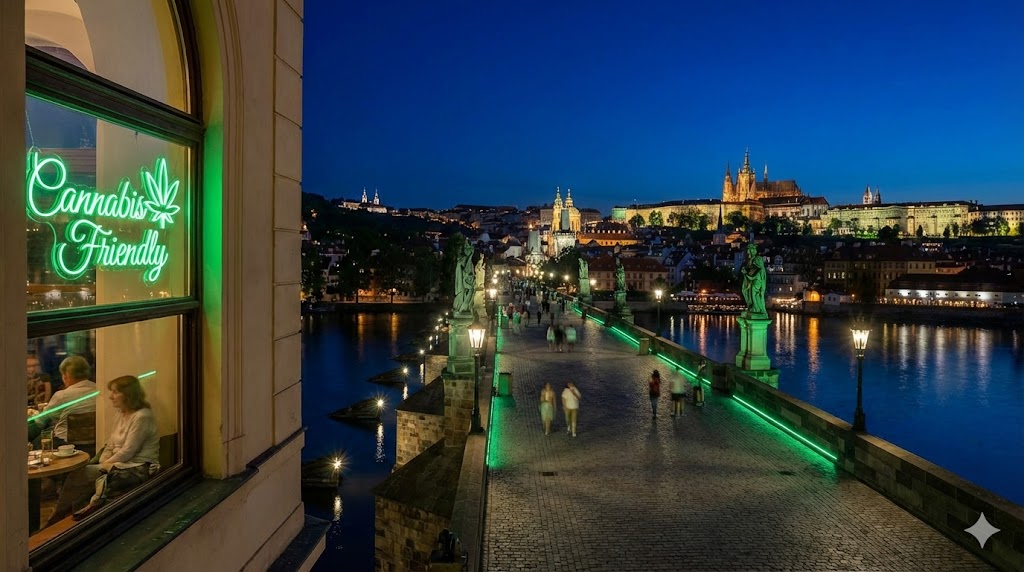
The Czech Republic is on course to become the next pro-cannabis hub in Europe, with the government announcing that it will officially come into full force on January 1, 2026.
In contrast to the complicated “social club” system in Germany, this Czech model is refreshingly simple: Anyone over 21 will be allowed to grow a maximum of three cannabis plants in their homes and a maximum of 100 grams of dried cannabis flowers in their residences.
The law, which has already passed both the Chamber of Deputies and the Senate, aims to conform to a “rational” Drug Policy with a focus on harm reduction rather than repression.
Such a step basically dissociates the Czech Republic from the pace of the European Union consensus, thus making it a challenge in terms of personal freedom regulation.
Although the sale remains illegal in order not to contradict European treaties, possession is decriminalized, thus bringing an end to the “war on drugs” for consumers.
You can see that this new move has already triggered a “green tourist” buzz among countries in this region.
For Czech citizens, this is a welcome end to a state of constitutional ambiguity which lasted over a half-century, and represents a new dawn of freedom.
Source: International CBC