


Novel European Study Reveals Rapid Wound Healing and Skin Regeneration via CBD
Recently, highly innovative research published by the MDPI journal at the start of 2026 has revealed the incredible regenerative properties of cannabinoids for the improvement of dermatological care and wound healing.
Carried out by a group of European researchers, the clinical research was conducted on the effects and interactions between the application of particular concentrations of CBD and THC on human skin and gum cells — the main cells that help repair and protect tissue.
The results were extremely positive and revealed the incredible capacity of cannabinoids for the effective hyper-acceleration of the body’s natural processes of healing and recovery!
When the researchers applied the optimal concentrations of CBD on the human tissue samples, they witnessed a dramatic increase in the cellular migration and metabolic activity—the fundamental processes required for the complete recovery and closure of severe wounds and the overall repair of the human tissue.
At the same time, the cannabinoids revealed incredible anti-inflammatory properties and were able to rapidly reduce the secretion of harmful pro-inflammatory cytokines—the main culprits for the stagnation of the body’s natural processes of healing and recovery.
According to the research, the treatment was extremely safe and well-tolerated by the human tissue, avoiding the issues associated with cellular toxicity caused by the application of harsh and synthetic topical agents.
By directly interacting with the body’s endocannabinoid system present in the human tissue, the plant-based treatment is a highly effective and soothing solution for the treatment of complex cases of dermatological care and wound healing.
Real-World Evidence Study Shows Multi-Symptom Improvement
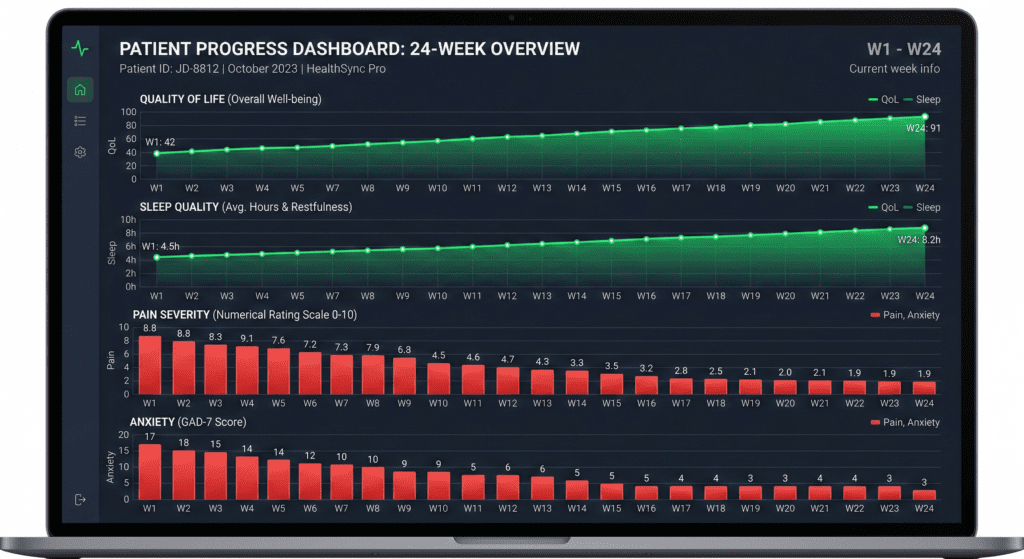
Significant prospective observational research published in the February 2026 edition of the Canadian Journal of Pain has given the world much-needed “real-world evidence” on the long-term benefits of using medical cannabis.
Under the guidance of Dr. Hance Clarke, the Director of Pain Services at the University Health Network (UHN), the research monitored the effects on 139 patients who were permitted to use medical cannabis over a 24-week period.
In contrast with other clinical trials where the subjects were only allowed to use the product under strict conditions, this particular piece of research was conducted under normal conditions and monitored the effects of the product on the average patient with complex and co-occurring conditions.
The results were extremely positive, with the patients benefiting from significant improvements in the five main areas of health: pain levels, pain-related disabilities, anxiety levels, depression levels, and the duration of sleep. What was also significant was the fact that the patients experienced these benefits not only during the 24 weeks but also during the final five months.
The patients also experienced a significant improvement in the overall “health-related quality of life.”
This is significant because it shows the patients were able to get back into the normal activities they were previously unable to do because of the effects of the condition they were suffering from.
Most importantly, the research was also important because it showed the benefits were the result of a “clinician-supervised model.”
This shows the patients were able to get the benefits without any significant negative effects.
Yale Study Identifies CBG as a Powerful New Tool for Pain Relief
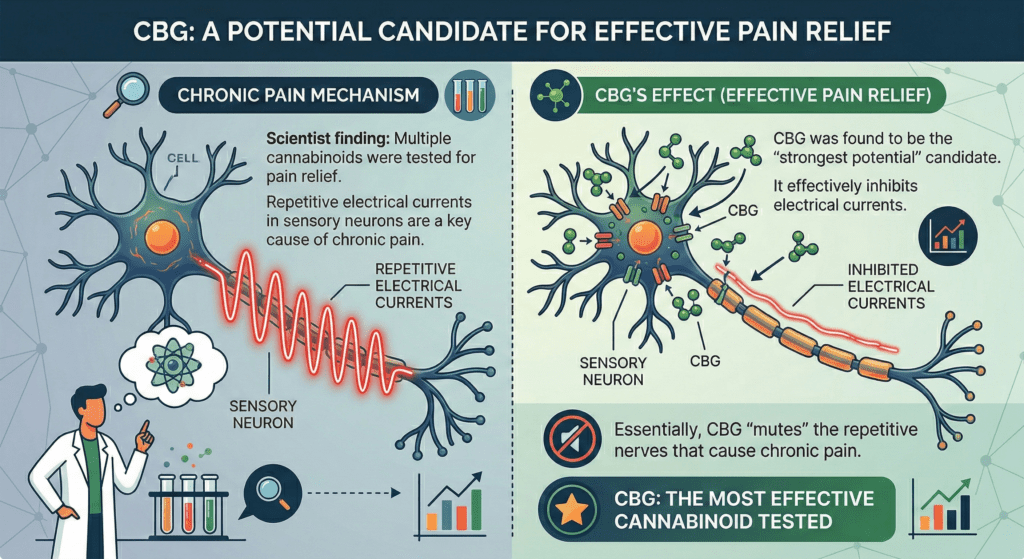
Scientists at the Yale School of Medicine have found the precise mechanism that makes some of the non-psychoactive cannabinoids so effective at blocking pain.
In a study published early 2026 in the Proceedings of the National Academy of Sciences (PNAS), the scientists studied the ways that CBD, CBN, and, most importantly, CBG interact with the peripheral nervous system.
They found that these compounds target a protein called Nav1.8, which serves as a gateway for pain signals that run from the body to the brain.
Out of the cannabinoids tested, the scientists found that CBG was the “strongest potential” candidate for effective pain relief. They found that CBG was the most effective at inhibiting the electrical currents that run through sensory neurons. In essence, the scientists found that CBG was able to “mute” the repetitive nerves that cause chronic pain.
This is significant, as the Nav1.8 protein is found primarily in the peripheral nervous system.
This means that the pain-relieving effects of cannabinoids such as CBG can block pain without affecting the central nervous system, thereby avoiding the “high” that many experience.
Mohammad-Reza Ghovanloo, the lead author of the paper, states that the findings of the research provide the basis for a new class of non-addictive, cannabinoid-based analgesics.
By providing the biological basis for how the effects of the minor cannabinoids such as CBG work at the cellular level, the research provides the basis for the development of effective treatments for arthritis and related painful conditions.
This provides a promising solution to the opioid crisis, providing a scientifically validated solution that is safer and potentially more effective for the masses.
Microdosing Cannabis Successfully Pauses Alzheimer’s Decline

Never-before-seen clinical trials published in the Journal of Alzheimer’s Disease in early 2026 proved that micro-doses of cannabis extract hold the key to stopping the progression of cognitive decline in patients with mild Alzheimer’s.
This study was done on the hypothesis that micro-doses of the substance could be beneficial to Alzheimer’s patients without the negative effects of the active ingredient THC on elderly patients.
All the patients were suffering from early-stage Alzheimer’s and were given a standard dose of the extract on a daily basis. At the end of the trial, the patients showed a “stabilization” of cognitive decline, which is normally a rapid progression in Alzheimer’s patients. This micro-dose treatment also modulates the neuro-inflammation and oxidative stress associated with the destruction of brain cells.
This was deemed to be an unprecedented study since the patients showed the effects of the micro-dose treatment without any negative effects such as a “high” and any other negative effects such as dizziness and confusion.
The research goes to prove that the endocannabinoid system is still a viable option for treating patients with Alzheimer’s, irrespective of how advanced the condition is.
This is a groundbreaking study since micro-dosing is a safe, affordable, and extremely effective treatment for the long-term care of the brain in the elderly.
It also gives hope to the patient and the caregiver to put off the inevitable and greatly improves the quality of life.
Spanish Clinical Trial Demonstrates Powerful Antitumor Synergy for Glioblastoma
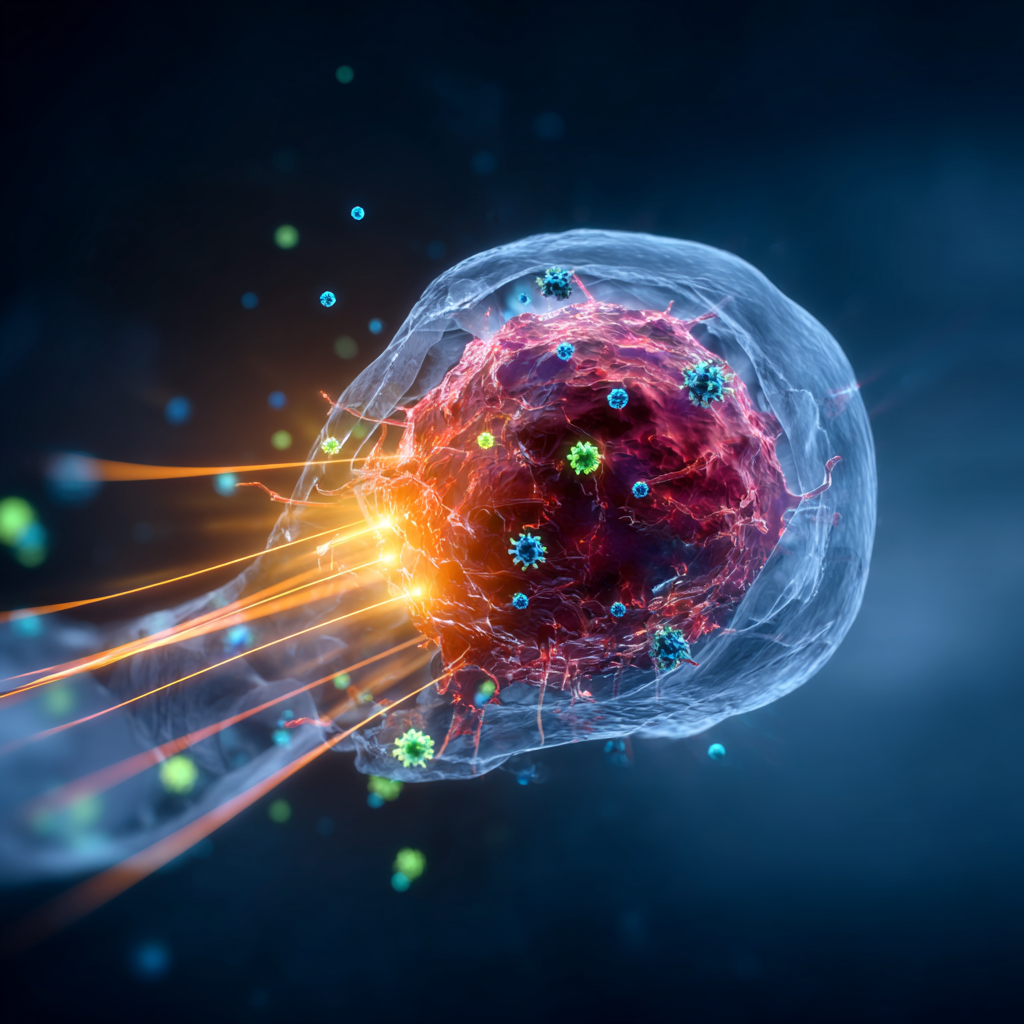
Groundbreaking findings have been noted in a Phase Ib clinical trial led by the Spanish Group for Neuro-oncology (GEINO) in early 2026, and this is indeed incredibly hopeful news for all of those who are fighting against a particular type of aggressive brain cancer known as Glioblastoma.
This particular clinical trial was conducted to determine the effectiveness of using a precisely balanced THC and CBD cannabinoid formula in conjunction with traditional chemotherapy and radiotherapy.
This cannabinoid formula was derived from highly successful preclinical models and was conducted to determine if the synergistic effect of using this particular cannabinoid formula in conjunction with traditional chemotherapy and radiotherapy was effective.
According to the findings of this particular clinical trial, it was noted that the THC and CBD cannabinoid formula was capable of actively binding to the CB1 and CB2 cannabinoid receptors located in the immune system and glial cells, which inhibited the growth of the tumor and actively initiated cell death.
In addition to this, this specific cannabinoid formula was noted to have a profoundly positive effect on the quality of life of the patients that were a part of this particular clinical trial.
The formula was noted to be highly effective in alleviating some of the more aggressive and agonizing side effects of traditional chemotherapy and radiotherapy, such as extreme nausea and neuro-inflammation.
This particular dual-action formula is indeed a major leap forward in the world of medicine and science.